Saturday, February 19, 2011

It Came From the Back Issue Bin! #15: Hellboy and more...

by Jason Shayer


Hellboy - The Sleeping and the Dead #1-2
Writer: Mike Mignola
Artist: Scott Hampton

Let me get this out of the way right now. I’m a Mignola-drawn-Hellboy purist and have been disappointed that all we’ve been getting from Mignola in terms of art have been covers. With that said, Hampton’s art is quite nice. He’s no Mignola with his light and shadows, but there are several stunning pieces in this book. However, with this story, I really don’t have an issue with the art...

This tale starts off rather straight-forward with Hellboy taking down a vampire, but things get complicated and interesting when his actions turn out to have some unintended consequences.

The first issue really slows down the pace of the story, almost to the point that I abandoned it. I didn’t see the need for so much exposition. In fact, the second issue’s recap is far more effective at setting the stage without a dozen pages of dry exposition. This story should have simply been a one-shot. It’s a great story, don’t get me wrong, but the pacing was off and probably turned off a lot of readers.


The Last Zombie #2
Writer: Brian Keene
Artist: Joe Wight
Some of you may recall I reviewed the first issue and didn’t exactly have anything flattering to say about it. However, being a fair reviewer, I thought it would be good to check out issue #2 (especially since I’m a big Keene fan). I’m glad I did. It was nice to see that the story moved along at a bit more of a brisk pace. As Keene explains in the prologue, this is “a story about the living”. It’s not hard to draw parallels with The Walking Dead and that’s not necessarily a bad thing. This issue is building some characterization and I’m looking forward to see where this will go.

The artist seems to be finding his groove as there are some genuinely creepy panels. The lettering with that lack of vertical bar on the letter “e” is still annoying as hell. But, despite that, I’ll be picking up issue #3.


The Cape #1
Writer: Jason Ciaramella (based on Joe Hill’s short story, “The Cape”)
Artist: Zack Howard
I almost wrote this issue off thinking it was a tie-in to the new TV series “The Cape”, but upon closer inspection, it was based on the works of Joe Hill. So I picked it up. And I was impressed. The story is a straight-forward adaptation, but it’s the art that really shines.
The narration and dialog seemed stretched thin, but it did amplify the art and gave it a powerful presence in the storytelling.

The story ends with a disturbing full-page panel that’s quite a payoff. As well, it hints that this comic will have a sequel. This issue impressed me enough to see where they can go with this and perhaps it will give the writer a bit more of an opportunity to make an impression.


1985 - Marvel Graphic Novel 017 - The Revenge of the Living Monolith
Writer: David Michelinie
Artists: Marc Silvestri/Geof Isherwood

I’ve always loved the title of the graphic novel as it has a fun 1950s feel to it. And its bold cover showcasing the might of the Living Monolith as he crushes one of the Twin Towers with people fleeing about like scattering ants.

The idea for this graphic novel apparently came from Jim Owsley “I wanna do ‘The Monster That Trashed New York”, something on a big scale, like those old ‘50s monster movies. We’re gonna call it - are ya ready for this? ‘The Revenge of the Living Monolith!’”

As with any great fiction, a sympathetic character is a great way to make readers care about your story. In this graphic novel, Michelinie makes the villain, Ahmet Abdol, the mutant better known as the Living Monolith, a wonderfully sympathetic character and the way the story is constructed, Ahmet is the protagonist. Leveraging mutant hysteria and tragedy, you feel totally justified for Ahmet as he assumes the mantle of the Living Pharaoh and makes his latest bid for power.

His daughter Fayah betrays her father and turns to the Fantastic Four to help stop her father’s latest mad scheme. However, to spoil things, it’s a ruse meant to help the Living Pharaoh capture the Fantastic Four. Using the cosmic energy stored in the cells of the Fantastic Four, the Living Monolith transforms himself into the massive giant known as the Living Monolith. The She-Hulk (at that time a member of the FF) gathers a handful of heroes to take on the Living Monolith.

This wonderful 80-page story reads like a cross between a James Bond movie and the Fantastic Four. With a lot of great action scenes and great twists and turns that keep you flipping pages. Michelinie adeptly handles all these classic Marvel characters like Spider-Man and Captain America amid all of that action.

The art and colors are absolutely stunning and keep in mind this is from 1985 when comics were printed on paper that was barely above newsprint in terms of quality. The inks by Geof Isherwood are also worthy of note, giving the finished product a Bernie Wrightson feel to it. And the lettering by several of Marvel’s finest of the 1980s, like Joe Rosen, Rick Parker, and John Morelli, is also worthy of some praise especially the way it complements the action in the panels.

--Jason Shayer

Graphic Horror: Game Reviews

By Brian M. Sammons

Not much to talk about this month. The first of the year is always a slow time for games. Now there is a big elephant in the room here as there was one horror game released in January, but I have a rule; if a publisher, PR company, production house or what have you can’t be bothered to send me something to review, then I can’t be bothered to review it. That said, if you know the game of which I speak I will say this about it; it’s not as good as the first one. The story is kind of weak, and sadly, it’s not scary in the least. Consider it a good third person shooter, an ok action game, but not really a horror game. It’s a rental, at best.

Ok, now that the freebee review is out of the way, I do have two little things for you. Sadly, they’re not scary, but one does have lots of monsters in it and the other offers tons of style.


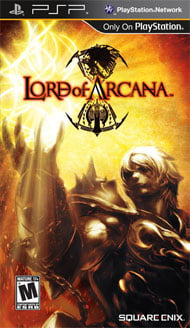
LORD OF ARCANA, by Square Enix, Rated M, PSP


For Sony’s hand held PSP comes this derivative take on the insanely popular (in Japan, at least) MONSTER HUNTER series of games. If you’ve never played those games, well you hunt monsters (duh) in a fantasy setting complete with swords, armor, magic and all the tropes that go along with that setting. What makes the MONSTER HUNTER games so successful is the huge open world that does a good job of pulling of the whole “living world” thing and the large number of challenging and memorable monster fights. Sadly LORD OF ARCANA does a pretty poor job when trying to do the exact same thing.


The world of LoA is poorly realized. When you want to get a quest you do so by speaking to one of the people in the Slayers Guild. You are them magically whisked away to were the critters you must kill are located. So if you were looking for exploration of any sort, you’re going have to keep looking. But that is not to say that the “joy” of having to sit through lots and lots of loading screens has been denied you. Oh no, each area is comprised out of a lot of smaller zones and every time you cross over into them you have to wait for them to load.

Once you arrive on the scene of your hunt you have a time limit to beat so you’ve got to be on the quick side. Into this area are a number of wandering, low level, random monsters and battling them quickly become a tedious choir as they always behave the same way. For example the skeletons are always, and I mean ALWAYS, blocking so that means you always got to get behind them to do any real damage. Literally that is the one and only way to beat these minions. I thought one dimensional fights like that were a thing of the past. Sucks that this game proved me wrong.


The boss battles fare little better. They all have a predictable pattern they are forced to repeat and once you figure it out all challenge from the encounter vanishes. Worst yet are the bosses that rely on cheap and frustrating tricks to change things up. A prime example of this are the bosses that turn you tiny, making your attacks do virtually no damage. In order to regain your original size you must run over and hit a floating “keystone” but because you’re small you move much slower than usual. If you think that makes the battle more challenging, you’d be wrong. It does however make it an exercise in tedium. Oh joy. Lastly all boss hunts end with a quick time event. If you’re a fan of quick button mashing, they you’ll love this. If not, then not so much.


The one bright spot in the otherwise dull combat are the bloody and over the top finished moves called coups de graces. These are fun and they never really get boring, but they alone can’t save all the tedious combat which unfortunately does get old right quick.


To help share the pain, you can play with a few friends via local multiplayer. It doesn’t make the quests any more fun or the battles any more engaging, but at least you won’t be alone. However there is no online multiplayer and only the host can save any quest progress so you, and anyone else with this game, will quickly learn that teaming up with someone in their game offers you very little in way of rewards.


Lastly, the game just doesn’t look all that good. Handheld games never have the best of graphics, but as far as portable games go, those on Sony’s little machine usually look a lot better than they do here. The monsters, you know, the main selling point to this game, look rather bland and outside of a few bosses are completely forgettable. The world you quest through are likewise blah.


So unremarkable graphics, combat mechanics, monsters and setting…are you psyched for this game or what? Yeah, me neither.


I give LORD OF ARCANA a less than middle of the road 2 blatant knockoffs out of 5.


DEAD ISLAND, by Techland, for Microsoft Windows, Xbox 360, PlayStation 3,

review by Steven M. Duarte

My excitement for this game jumped up tenfold when I viewed this trailer earlier this week. We normally don’t do previews for games on the Black Glove but this trailer was just too awesome to not share with everyone. The game is Dead Island. You will play as someone who just arrived at a private resort for a relaxing vacation. The only problem is you arrived in the middle of a zombie apocalypse. The game is said to focus on melee combat which would be a huge departure from current zombie games that rely on firearms and projectiles. The game will have an open world RPG like feel to it according to the game developers. I have never watched a trailer over and over so many times. The music, the scenes of action, the emotions, it’s just too much. The game is said to be released sometime this year with no official release date.


--Steven M. Duarte


GENRE BREAK


STACKING, by THQ & Double Fine Productions, Rated E10 +, PS3, Xbox 360


Double Fine, the company headed up by video game funny man, and genuinely creative dude, Tim Schafer, has decided to focus its efforts away from big budget titles to smaller, quicker to produce, and cheaper to buy downloadable games. The first effort for this new biasness model was the very cool COSTUME QUEST. This is their second and it could not be more different than CQ, but does that make it bad?


No, not in the least.


Set in the final days of the industrial revolution, this game does have a deceptively simple premise, but a unique one. You play as Charlie, the world’s smallest Russian nesting doll. Because you are so tiny, everyone pretty much dismisses you and thinks you can’t do anything. Boy, are they wrong. Due to your petite size, you can jump into (or stack) any other nesting doll, thereby gaining control of them. Each doll you hijack has special abilities that you will use to solve a variety of quest related puzzles. For example, let’s say that you have to clear all the people out of a restaurant. Well you could jump into a cop doll and maybe order everyone out of the place. You might stack into the chef and have him mess up the food so that everyone gets unhappy and leaves. Then you could always jump into a gassy doll and have him enter the room and clear everyone out with your powerful flatulence.


That brings up the two main features to STACKING. First is the multiple solutions to the same puzzle and the second is Double Fine’s patented off kilter, sometimes wonderfully juvenile sense of humor. While the humor is great, it always tickles my inner thirteen-year-old, the multiple replaying of puzzles is both good and bad. It’s good because it adds variety to the game. It’s bad because the variety at times seems a bit forced, like an artificial way to extend the play life of a very short game. How short? Well if you’re not interested in doing each puzzle five times over, you can blow through the game in about three or four hours.


Therein lies the biggest problem with STACKING, the old question of cost vs. game length. This game costs $15. Now it is fun, unique, has a great art style and does offer a few laughs, but no matter how you slice it, it’s $15 for three or four hours. You will have to decide if that’s a bargain for you, or should you wait and see if the game goes on sale.


I give STACKING 3 little dolls all stacked together out of 5.

--Brian M. Sammons

Dark Suites Music Reviews


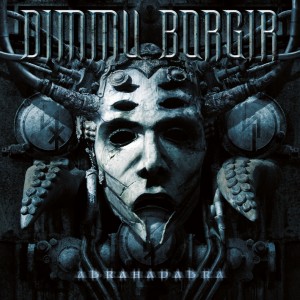
Dimmu Borgir: abrahadabra (2010)

Review written by Steven M Duarte

Ready for some more Norwegian Black Metal? Well you’re in for a treat with Dimmu Borgir’s latest release abrahadabra which translates to “I will create as I speak,” a quote taken from Aleister Crowley’s “The Book of the Law.” In a world of poser death/black metal bands Dimmu Borgir is one of the black metal bands that stay true to their image and music. While their previous album “In Sorte Diaboli,” was a dark medieval tale about a priest, abrahadabra is a brooding journey through a dark desolate icy wasteland with Lovecraftian themes. The album art actually included tentacles to directly associate with Lovecraft.

While Dimmu has always been known for their theatrically symphonic sound, abrahadabra takes it to the next level. Prior albums may have featured the use of symphonies on some of the tracks but this new album sees a majority of tracks containing the symphonic sound. It has been said that Dimmu used a 51 member orchestra along with a 38 member choir to create this album. The use of these musicians also aided in an overall diverse album from what we have been used to.

One noticeable difference is the use of a different clean vocalist. Long time clean vocalist Vortex was apparently fired from the band in early 2010. The new album uses a couple of session singers to lend their voices. While the session singers get the job done the sound does sound much different with the absence of Vortex. He had such a strong opera sounding voice that added great contrast between lead singer Shagrath’s vocals. One minor squabble with an otherwise respectable album.

Final words
Dimmu Borgir would be in my top black metal bands list only second to Cradle of Filth. While not a huge black metal fan I do tend to listen to Dimmu and have seen a decent amount of black metal bands in concert. I would almost have to give Dimmu’s new album a leg up over Cradle of Filths most recent release. The compositions and heavier inclusion of choirs and orchestras truly make abrahadabra an epic album.


Track List

01. Xibir (2:50)
02. Born Treacherous (5:02)
03. Gateways (5:10)
04. Chess With The Abyss (4:08)
05. Dimmu Borgir (5:35)
06. Ritualist (5:13)
07. The Demiurge Molecule (5:29)
08. A Jewel Traced Through Coal (5:16)
09. Renewal (4:11)
10. Endings And Continuations (5:58)

--Steven M. Duarte


LEMMY: The Documentary (2011)
Directed/produced by Greg Olliver and Wes Orshoski

Review by Nickolas Cook

This truly modern classic documentary follows the daily life of the world's most famous hard rack/metal bassist, Motorhead's Lemmy Kilmister. He is man of legend when it comes to indulging in life's excessess. His stories of boozing and sexing have been myths passed down through generations of diehard fans, and have in many ways perpertuated the strange behaviors which the band is routinely accused of during the course of a worldwide tour.
At age 65, Lemmy, and his current Motorhead band members, show little inclination to slow things down for the ever approaching grim reaper. No, if this documentary does any one thing, it's to illustrate just how at arms length Lemmy and company intend to keep the forked tongued bastard at bay in their declining years.
There are many moments of humor, both intentional and unintentional throughout the film, which display the nitty gritty facts of life that Lemmy is an aging bacholor (by choice, so no quiet empathetic moans, please) and that he's just now beginning to feel certain parts of his life aren't as fufilled as they might be...and sadly, he admits for the camera, these things aren't ever likely to be fulfilled.
Still, all in all, the documentary manages to also gives a round picture of a man who is still doing the one things he loves with all his heart and hopes to keeo doing for a nother hundred years, Gods willing.
For you HawkWind fans, there's even a little history of their work, and their eventual and inevitiable breakdown from within.
The music couldn't be any better, as we are given backstage privy to rehersals and studio sessions with some of the tops names in classic and modern hard rock and modern metal music. There are several candid and mostly humorous interviews with the likes of Dave Mustaine and Dave Gruel and others and how Lemmy's musical style and his personal philosophies helped shaped them, but also the metal musci world in general.
I found the entire documentary to be uplifting and respecftul, to say the least. I've always been a Motorhead fan and feared this doc could very easily have turned in to a post modern dissection of a musical machine that has delivered with consistant professonalism for decades. But that was not the case. This was an utter delight and made me love not only Motorhead all the more, but Lemmy even more. He's got to be one of the most down to earth legends were sure to ever meet.


--Nickolas Cook


Burial--Untrue (2007)

Review by Nickolas Cook

With this second album from the UK's newest electro-dub rising star, Burial (aka William Bevan) continues to incorporate solid undercrurrents of menace, emeotionally dark and other electro-beats styles into his works. But most importantly, because of his industry legend disfavor of the machine controlled cut and paste style of adding drum sequencing to his songs, he laboriously sits through hours and hours of cut/splice session for every single beat in every single songs on every single album. He spents massie amounts of time putting together these rythym sections, both single beat and polyphonic. And it shows in each of the songs as they sit slightly to the right of what one expects to hear in these songs.
Also Burial has a brilliant inante ability to find just the right pitch of voice to add to his own mixture that helps to bolster the haunted quality to his music. In fact that is one of the main selling points to Burial's two LPs to date: that sense of wide open dark spaces on all sides of the listener, a ruined cathedral, perhaps, inhabited by one of old M.r. James' hungry, greedy spirits seeking a way out through the beats and phrases.
Coupling that sense of ancient unseen hunger with modern upbeat samplings from such artists as Beyonce and India Arie and Christina Aguilera provides a template by which most modern music lovers can find at least one thing to appreciate in this man's great and unique music, now being dubbed as Hauntology or Spirit Dub.


Tracks:
1."Untitled" - 0:46
Contains a voice sample from David Lynch film Inland Empire
2."Archangel" - 3:58
Contains samples from "One Wish" by Ray J
Contains a sample from the intro video of Metal Gear Solid 2.
3."Near Dark" - 3:54
4."Ghost Hardware" - 4:53
Contains a sample from "Beautiful" by Christina Aguilera.
Contains a sample from Metal Gear Solid.
Contains a sample from the film Girl with a Pearl Earring.
Contains a sample from the Metalheadz: Talkin' Headz documentary, spoken by Andy C.
5."Endorphin" - 2:57
Contains sample from "Lost Carol" by Akira Yamaoka and Mary Elizabeth McGlynn.
6."Etched Headplate" - 5:59
Contains a sample from "Angel" by Amanda Perez.
Contains a sample from "Ready For Love" by India Arie.
Contains a sample from DVD extra cast interviews for the film Bullet Boy (spoken by Claire Perkins).
7."In McDonalds" - 2:07
Contains a sample from "I Refuse" by Aaliyah.
Contains a sample from the film Bullet Boy.
8."Untrue" - 6:16
Contains a sample from a cover of "Resentment", originally by Beyoncé
Contains a sample from "Whisper" by Ernie Halter.
9."Shell of Light" - 4:40
Contains a sample from "Whisper" by Ernie Halter.
10."Dog Shelter" - 2:59
Contains a sample from "Eastern" by Blackfilm.
11."Homeless" - 5:20
Contains a sample from a cover of "Who's Lovin' You", originally by Smokey Robinson, probably via "Hold On" by En Vogue
Contains a sample from "Beautiful" by Christina Aguilera.
12."UK" - 1:40
13."Raver" - 4:59
Contains a sample from "Show Me Love" by Robin S.

--Nickolas Cook


Easy Rider (Original Soundtrack Recording) (1969)

review by Nickolas Cook

Taken from one of easily the most imporant counter-culture films ever made (written and directed by the late Dennis Hopper, who also co-starred in the film as "Wyatt") these were songs that at once speak to the heart of the disenfranchised in the late 60s and to a modern audience who fill as disenfranchised by the same social elements in our society
as they did back then. There're songs of cycnicism and hope, next to earnet lyrics of hope for mankind--if we can get our shit toegether long enough to come together for one another and make some positive lasting changes for our genration and the ones after ours;
All weell and good, but you people came here to to dig the music, right?
Although it's ostensibly a soundtrack, this truly turns out to be a sort of best of collection for that era of music--before the corporate greedheads got a chance to start adding their 'singles' minded fingers into the process.
Even by today's post modern standards there is no better opening to a movie than Steppenwolf's "Born to Be Wild", and Jimi Hendrix's "If Six Were Nine" still hold truer than ever today. All in all, each song is a definition of a time and place in this country's history and mentality which will never come again. So you better enjoy it while you can and for what it meant to a country in emotional and culturual turmoil.


Tracks:
1."The Pusher" (Hoyt Axton) – 5:49
Steppenwolf - Steppenwolf (1968)
2."Born to Be Wild" (Mars Bonfire) – 3:37
Steppenwolf - Steppenwolf (1968)
3."The Weight" (Jaime Robbie Robertson) – 4:29
Smith (1969)
4."Wasn't Born to Follow" (Carole King/Gerry Goffin) – 2:03
The Byrds - The Notorious Byrd Brothers (1968)
5."If You Want to Be a Bird (Bird Song)" (Antonia Duren) – 2:35
The Holy Modal Rounders - The Moray Eels Eat the Holy Modal Rounders (1969)
6."Don't Bogart Me" (Elliot Ingber/Larry Wagner) – 3:05
Fraternity of Man - Fraternity of Man (1968)
7."If 6 Was 9" (Jimi Hendrix) – 5:35
The Jimi Hendrix Experience - Axis: Bold as Love (1967)
8."Kyrie Eleison/Mardi Gras (When the Saints)" (Traditional, arranged by David Axelrod) – 4:00
The Electric Prunes - Mass in F Minor (1968)
9."It's Alright, Ma (I'm Only Bleeding)" (Bob Dylan) – 3:39
Roger McGuinn (1969)
10."Ballad of Easy Rider" (Roger McGuinn/Bob Dylan) – 2:14
Roger McGuinn (1969)

--Nickolas Cook

The Horror Playlist: Nick Cato


compiled by Nick Cato

Many authors have told me they need complete silence when they write. While I do need it for revisions and final drafts, I actually require background music while I work on first drafts. Nothing gets me more into what I’m doing than music I can envision in certain scenes I’m working on.
Here’s the top 13 songs I find myself going back to again and again when I sit down to belt out a first draft (listed in no particular order of importance)…


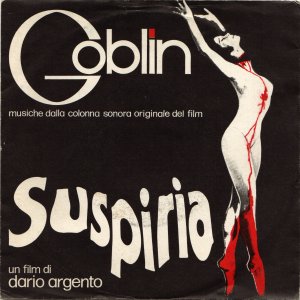
1) Goblin’s amazing soundtrack for Dario Argento’s SUSPIRIA (1977) is not only the creepiest music ever written for a horror film, it’s an incredible horror-muse-assistant. Although all 12 tracks on the original soundtrack album are great, the main track (titled—what else—SUSPIRIA) manages to inspire me as it continues to give me the chills over 30 years since I first heard it.


2) AT DAWN THEY SLEEP. While this track from Slayer’s 1983 album ‘Hell Awaits’ sounds (musically) like most of their other songs, the lyrics (dealing with vampires and zombies) are done seriously, and there’s a rare slow part toward the middle that blends creepiness and heaviness in a way that gets my creative juices flowing.


3) DEATH VALLEY 69. Love them or hate them, Sonic Youth have always had the ability to disturb the listener…and this tribute to the Mansion massacre (with it’s heavy bass line and distorted feedback guitars—not to mention guest vocals from Lydia Lunch) is as spooky as meeting Charlie himself in a dark alley. From their 2nd album, Bad Moon Rising (1985).


4) DARK ENTRIES. Even if Goth isn’t your thing, I can’t see any horror fan not getting a rise out of this Bauhaus classic. Along with the down-tuned guitar, Peter Murphy’s baritone voice is the closest thing to a “real” Dracula ever recorded. Bleak lyrics and a spoken mid-section always get me in the proper mood to pen the more unpleasant passages. (Available on the CD collection, BAUHAUS: THE SINGLES: 1979-1983).


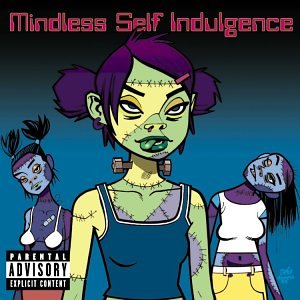
5) FRANKENSTEIN GIRLS WILL SEEM STRANGELY SEXY. I’m listing an entire ALBUM here as this 1999 release from Mindless Self Indulgence features so many wild tracks it’s hard to mention just one. Suffice it to say, I like to play ‘Planet of the Apes,’ ‘I Hate Jimmy Page,” and ‘7-11’ when I’m doing my more bizarre material.


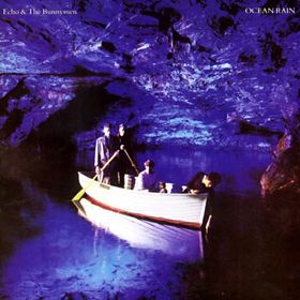
6) CLAY. Echo and the Bunnymen manage to get under the listener’s skin with this track from their 3rd album, ‘Porcupine.’ CLAY sounds a bit different from the band’s usual pop anthems in its off-key riff and overall eeriness. I’ve kept this song on a continual loop many times during some late-night writing marathons (and will most likely continue to do so).

(Sorry, no video available for this song)


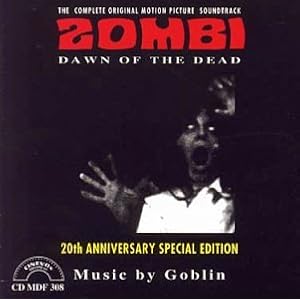
7) If I had to pick the A-#1 song I usually find myself writing to, it’d have to be ALBA DEI MORTI VIVENTI, another amazing song by the Italian band Goblin. This is the main theme song from George Romero’s 1979 classic DAWN OF THE DEAD. Its steady heart-beat bass line and spooky keyboards provide the ultimate background music for anyone attempting to pen dark fiction.


8) THIS CORROSION is an addictive track from Sisters of Mercy’s 1987 semi-hit album “Floodland." Singer Andrew Eldritch’s voice is (arguably) the most vampiric next to Peter Murphy’s, and backing vocals from (then) new member Patricia Morrison are to die for.


9) MARLEY’S GHOST. From her 1997 debut album, Kristeen Young takes her amazing voice to the limit in this study of mental and spiritual struggles. Along with her unique keyboard style, this one contains a few screams that send genuine shivers down your spine. How she used to pull this one off live (without losing her voice for the rest of the show) is anyone’s guess.


10) DIABLOS ‘88 is an instrumental from ‘November Coming Fire,’ Samhain’s 2nd album. With its Western-style and chants in the background, I often place this one at the start of my writing playlist as it has that certain thing that manages to get your butt in gear. (Amazing: I listed a Glen Danzig song that doesn’t feature his legendary vocals!)


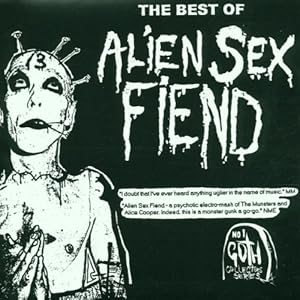
11) NOW I’M FEELING ZOMBIFIED. Techno-Goth hybrids Alien Sex Fiend are truly an acquired taste. They’ve release several albums since the early 80s, but this song (originally featured on a 12” vinyl single) is the epitome of their sound. Dawn of the Dead-ish keyboards, a driving beat, and Nik Fiend’s screeching space vocals (not to mention an 8+ minute length) make this a good one for long stretches of pen-to-paper (or finger-on-keyboard) madness.


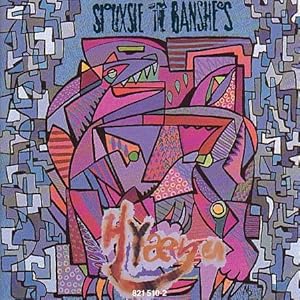
12) RUNNING TOWN. Man, do I have a lot of Goth here. This track from Siouxsie and the Banshees’ 1984 album ‘Hyaena’ is an upbeat and haunting one that many of her fans seemed to have forgotten. It keeps my words flowing every time…


13) INTO THE VOID. Is there a horror writer out there who hasn’t in SOME way been inspired by Black Sabbath? (Of course there are…although I like how that sounded as an opening sentence). While I like several other Sabbath songs more than this, VOID’s opening guitar riff has HORROR written all over it, and the flow of the vocals (when they finally kick in) manages to help my word count pile up.


--Nick Cato

(The Black Glove wishes to thank new staff writer Nick Cato for giving us his top ten Horror Playlist for this month. We welcome this new Horrorhead extraordinaire to the magazine with open and bloody arms. And for the coolest, hippest Horrorhead site on the net, stop by and check out Nick's blogspot, ANTIBACTERIAL POPE.)

Top 13: All Time Best Werewolf Movies

by Nickolas Cook

Welcome to another Black Glove Top 13 list, brought to you by our staff of true-blue Horrorheads. One of our favorite monsters in horror cinema is the good old standby since the silent era of film, the Lycanthrope, commonly known as the Werewolf, although, as proven by our Top 13 list from our April 2010 issue #10, in which we listed 13 of the greatest and oddest were-creatures in cinematic history, it’s easy to see why the hirsute shape shifters aren’t the only shifters to worry about in the dark of the night, when the moon is full...
But this month we’re going to list our Top 13 All-Time Best Werewolf movies. You may see plenty of familiar and unsurprising movies on the list, especially if you’re a Horrorhead who grew up in the 80s. But I think you might also find a couple of films on our list that will surprise you, maybe even leave you wondering why we chose them over other werewolf films.
What you will not see on this list are crap-fests like “Van Helsing” (2004), or the “Underworld” shit-o-rama series (2003-2009). And you certainly will not find terrible attempts at sequels, such as “An American Werewolf in Paris” (1997), or the latest in a long line of dried up, moronic remakes, such “The Wolfman” (2010), or movies that rely mostly on CGI effects over honest, imaginative animatronics, puppetry and makeup special effects. Movies so badly done that a true Horrorhead can only cry out in anguish: “Oh, Jack Pierce! Where are you?!”
But, of course, Jack Pierce is dead. Has been since 1968, a year before I was born. But his legacy lived on into my childhood and he became a sort of special effects hero to me and a whole new generation of Monster Kids in the 70s and 80s (and if you don’t know what a Monster Kid is, then stop by here and check out some of the most famous ones who are doing the good work of keeping the legacy alive: Monster Kids Forum. Jack Pierce helped create a whole new generation of special effects artists in 70s and 80s Hollywood, including such famous artists as Stan Winston, Tom Savini, the great Rick Baker, Rob Bottin and others, who became special effects heroes to millions of horror fans with their work in several of the movies which appear on this month’s Top 13 list.
Why are special effects so integral to the ‘werewolf’ movie?
Well, quite simply, since Pierce’s classic special effects work in the original 1941 “The Wolfman”, the transformation scene has become the major scene in every werewolf movie. Needless to say, some have done it better than others, and some have even managed to carry the scene with a subtly that transcends the need for big money special effects. But the unfortunate fact is that too many have just plain sucked at it and these films leave the audience anything but terrified.
Some of the movies on the list will reflect the transformation scene’s importance to the genre.
Others will reflect their cultural importance to the genre, an unconscious social and moral symbolism, which helped steer modern horror cinema down new avenues.
And still others…well, they made it on the list because of their personal importance to me and most of The Black Glove Staff. Even though they might not have the razzle dazzle of big studio productions, or even the social significance as described above, they meant a great deal to me and other horror fans.
Unfortunately, because of list constraints, we had to leave off a few great genre films- “Wolfen” (1981), “Ladyhawke” (1985), and “Monster Squad” (1987)- and even one awesome music video, Michael Jackson’s “Thriller” (1983), because they were tangential choices at best and didn’t really have enough werewolf in them to make the list. So think not that we forgot them; we just had to make hard choices to keep the integrity of the list intact.
But enough about what didn’t make our list. Without further ado, please enjoy The Black Glove’s Top 13 All Time Best Werewolf Movies (by year of release).


1. The Werewolf of London (1935)

The handful of silent films featuring werewolves notwithstanding, such as “The Werewolf” (1913) and “Le Loup Garou” (1923), this is the first big studio production featuring our hairy monster of the night. Universal Studios used part of the historical legend of the lycanthrope for this film, and had two of their big males actors, Warner Oland and Henry Hull, both of which would go onto bigger screen roles than “The Werewolf of London”, to tell the story of a brilliant, but egotistical, young botanist who travels to Tibet in search of a legendary flower with extraordinary lunar properties. But he’s not the only one searching for the flower in the high snowy mountaintops; Hull encounters a savage stranger who attacks him, leaves a nasty bite and the inevitable curse. Once back in London, Hull tries to stop his transformations and subsequent bloody murders by extracting the juice of the lunar flower during the full moon. Unfortunately that’s also when he turns into a werewolf, which makes wearing a lab coat sort of difficult, to say the least.
Oland, who turns out to be the savage stranger from the Tibetan mountains who is also a werewolf, tells Hull that part of the curse is that he will "kill the thing he most loves”. Which makes Hull’s wife pretty nervous.
Not to spoil the film, but it takes the inevitable tragic turn, as you can imagine.
The transformation scene does nothing to herald the truly genre classic special effects work of our next movie on the list.


2. The Wolf Man (1941)

Now this is THE classic werewolf movie of all time. Written by famous Hollywood genre writer and screenwriter Curt Siodmak (spelled several different ways in the credits of the literally hundreds of movies he wrote), this is the one which created the rules of lycanthropy—namely silver bullets, pentagram in the palm of the hand of the next victim, and the full body transformation during the full moon.
Starring Lon Chaney Jr., son to famous special effects/actor Lon Chaney, this tells the tragic story of Larry Talbot, who comes back to the family castle after the death of his older brother, where his father hopes to hand over the Barony to him upon his own death.
During a moonlight stroll with his romantic interest, poor Larry is bitten by a gypsy werewolf (played by Bela Lugosi, after his classic roles with Universal Studios were already on the downslide), and soon he’s howling at the moon and attacking anyone stupid enough to go out into the night without a crucifix and silver bullets.
And as with most werewolf films, this also takes the tragic turn by film’s end, but with this one Chaney’s performance (maybe the best of his career) lends it an emotional weight that most werewolf movies don’t have. This is truly a must-see classic of the horror genre, let alone the werewolf sub-genre.
One of the big sales of this film is the transformation scene, created and produced by the legendary special effects artist extraordinaire, Jack Pierce. This set the bar for all special effects in werewolf cinema to follow.


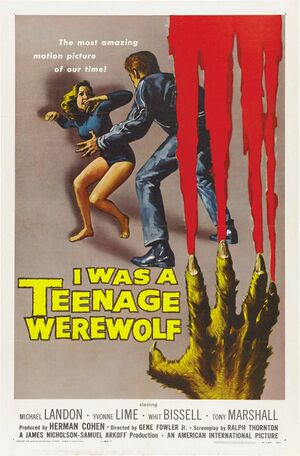
3. I Was a Teenage Werewolf (1957)

This film is famous for a couple of reasons. First of all, it starred Michael Landon, who went on to star in two well-known family friendly series, “Little House On the Prarie” (1974-1983) and “Highway to Heaven” (1984-1989). But this little ditty from American International Pictures (a studio that made its living producing and distributing cheap, socially and culturally opportunistic movies for teen audiences) is anything but family friendly. Landon plays an angry teenager who can’t keep out of fights at his high school. When he’s turned over to the local doctor for treatment, the evil doc, played by genre great Whit Bissell, hypnotizes him into letting his inner beast out. And before he knows it, poor young Landon is getting all furry and randy, and begins to go after his rock n’ roll lovin’, soda sippin’ teen friends, killing them off when he’s under the doc’s hypnotic influence. But beyond the all the growling and salivating, this is also a film about teen rebellion, symbolized by Landon’s propensity to get all hairy and violent whenever he loses his temper. It managed, along with dozens of other 1950s AIP movies, to touch a social nerve and has become a cult classic.


4. The Curse of the Werewolf (1961)

Next up, we finally get to the first of the foreign films on our list, Hammer Films Productions’ “The Curse of the Werewolf”. In the 60s, Hammer was the king of horror. They re-launched all those old classic Universal monsters, and along with AIP, managed to keep the horror light burning. Their particular vision for the new improved werewolf was this 1961 film which borrows from Guy Endore’s 1933 novel, “The Werewolf of Paris”. Oliver Reed plays the offspring of an insane beggar who rapes a mute servant woman. Orphaned, he is taken in by a rich family and raised as their own, but when he reaches adulthood, the curse strikes and he begins to transform into a werewolf who savages the unlucky local villagers and their cattle. This is a richly filmed period piece, set in 18th century Spain, and filled with wonderful colors and production details that only Hammer could pull off. The transformation scene isn’t as important as the final look of the werewolf, which looks nothing like any Lycanthrope before, with Reed’s huge build, covered in dark gray fur and blood encrusted lips, jagged teeth and pointed ears. Unlike the other classic monsters that Hammer made various sequels for, they never did another werewolf film. Although they followed the logical psychological line and made quite a few Dr. Jekyll and Mr. Hyde films, the human werewolf without fur.


5. La Marca del Hombre-lobo (The Mark of the Wolfman) (1968)

There’s only been one actor like Paul Naschy (aka Jacinto Molina), and there’s only been one werewolf like the Count Waldemar Daninsky. At his death in late 2009, Naschy had played the antihero werewolf in no less than a dozen films, and appeared in dozens of other horror films. He was a highly respected actor/director/writer/producer in his home country of Spain, and has gone on to become a cult icon in the industry. This is his first appearance as Daninsky, in which Naschy played the tragic Count who is bitten by a fellow werewolf. After killing innocent villagers during one of his transformations, he desperately seeks aid from two specialists, who unfortunately for our well meaning Count happen to also be vampires. Yeah, the Spanish love their monster mashes, and didn’t think anything of throwing just about everything but the kitchen sink in their exploitation flicks. But if you dig a little deeper, there is always a social and cultural symbolic examination going on. You might have to push a load of cheese out of the way to get to it, but it’s there, nonetheless. For instance, some critics have remarked that “Mark of the Wolf Man” is in essence about the then current struggle of the lower and middle classes against their aristocratic overlords in government and especially the Catholic church. Maybe it is, maybe it’s not. All I know if I have a damn great time watching Naschy in any movie, but me and all his other fans will always love him best as the poor cursed Count Daninsky.


6. The Werewolf vs. The Vampire Woman (1971)

This is another Naschy werewolf masterpieces, but it transcends all of the other Hombre Lobo films purely on its ambient mixture of slow dream like beauty and terror. The cinematography is still to be admired, even if some people might not care for the acting and production values. You have to at least hand it to the Spanish horror filmmakers of the 60s and 70s: they knew what worked (for instance, see Amando de Ossorio’s The Blind Dead series for that same strange mix of dreamlike terror and beauty). And while many might even say the transformation scene isn’t much better than any of the other Daninsky films, this one still manages to look better than most of the other 70s exploitation horror films involving werewolves (see “Werewolf of Washington” (1973) and “The Beast Must Die” (1974))This time Count Daninksy must battle an ageless vampire queen, while also falling in love with a stranded young woman who becomes his true love for the next hour and a half on screen. That is until she must kill him, as foretold by the legends (borrowed, by the way, from Siodmak’s Universal monster movie rules). This is one hell of a great old fashioned horror film, which tries to straddle the Gothic and the urban at once. Another reason why this movie deserves healthy recognition from Horrorheads around the world.


7. An American Werewolf in London (1981)

And this is when Hollywood began to get damn serious about their horror. You might even say this is when Hollywood began its systematic suffocation of an entire genre of cinema which always worked best when there wasn’t a lot of money to be had and cast and crew had to work hard to make their product believable. Despite what we can now historically see as the beginning of the end with such professionally made fanboy films as “An American Werewolf in London” (and our next film on the list), one still has to hand it to director John Landis and special effects artist Rick Baker for bringing werewolves into the limelight and treating them a long dormant respect, missing since the days of Universal’s monster movies.
When two young American men find themselves hiking during a full moon across the moors, they are warned by the requisite torch wielding villagers against such foolhardy travel arrangements. But being silly, arrogant Americans, they decide to do so anyway. Of course one of them gets bitten by a werewolf and becomes a werewolf himself. This is part comedy and part horror, a mixture which Landis handles very well (he should, having been previously the director of both “Animal House” (1978) and “The Blues Brothers” (1980)), using gore to help both the comedy and the horror in equal measure. But the true star of this film is Rick Baker’s special effects work. An incredibly physically detailed transformation scene that had never been attempted before actually makes you HURT to watch it. Flesh stretches, bone cracks and reforms, hair rips its way out of human skin. It truly must be seen to be believed, and until the advent of shitty CGI effects in every fucking scene in every fucking horror film, this was the bar for all other effects artists to rise to. It was the scene which drove all other horror to the special effects breaking point.


8. The Howling (1981)

That same year, another ground-breaking werewolf horror film was released, this one directed by Joe Dante, with a wryly humorous, but wholly respectful to classic horror, script written by none other than the great John Sayles (and if you don’t know who he is, get off your butt and rent his movies—all of them).
This one plays with genre expectations and blows them away. Again, the special effects have a lot to do with why this movie is to be respected in the genre. Special Effects guru Rob Bottin must have seen what Baker was doing for “An American Werewolf in London” and decided he had to try and top him. It was damn close. Again, Bottin takes the physically detailed and painful to watch route for his transformation scenes, making the viewer squirm in empathetic agony.
When a young female reporter is attacked and nearly raped and killed by a mysterious serial killer, she is sent to a remote woodland getaway with her husband to receive treatment from a famous psychologist. But it doesn’t take long to figure out that there’s something else stalking the woods than her mild psychosis. This time, there’s more than one werewolf. There’s an entire community of them, led by a sexy wolf bitch who wants to make humans their cattle.
Sadly, I just couldn’t find my way to including its first follow up, “The Howling II: Your Sister’s a Werewolf” (1985), simply because it was so bad…but the kind of bad we Horrorheads are always looking for in the genre.


9. The Company of Wolves (1984)

This is without a doubt the most unusual and the most literary of all the werewolf movies ever made. Based on Angela Carter’s short fiction, director Neil Jordon created an ambient fairy tale sense to this collection of vignettes that go to make up the movie, with its wraparound story of a young girl and her sometimes sinister grandmother, who likes to tell her scary tales of beastly men who stalk and eat young girls. The movie floats back and forth between the lines of nightmare and dreamland, at times giving the viewer gore and terror of the dark, and at other times sending the viewer into wispy, pastel colored shadowland of half remembered scenes of childhood. A place where trees grow into twisted shapes and hold the darkness of the forest close to their bosom A place where sunsets linger forever just on the periphery of vision and clear water runs from high mountains into perfect blue streams through the forest primeval.
Jordon takes his time with the scenery, allowing the camera to linger across the shadowed landscape. The various transformation scenes become more bestial with each new vignette, until by movie’s end, we have a full fledge canine leaping across the screen. The movie should have at least been nominated for an Oscar, if for nothing more than the cinematography. Highly recommended to those who claim horror films can’t be terrifying and beautiful at the same time.


10. Silver Bullet (1985)

Based on Stephen King’s (did you really he wasn’t going to make it on this list?) novella “Cycle of the Werewolf” (1983) this is one of the better of the 80s adaptations of his works, despite the many detractors. I guess somewhere along the way it became fashionable to cut down the man who helped make the genre a worldwide success.
In any case, this film somewhat successfully mixes coming-of-age story with straight up horror and then some. Starring one of the Coreys (Corey Haim, to be exact, who would also turn up in one of the most famous vampire movies a few years later, “The Lost Boys” (1987)), this is the story of a small town plagued with bloody murders by a mysterious killer. Haim plays a handicapped young boy who accidentally discovers the identity of the killer, and the fact that he’s not human. He finally convinces his sister and booze soaked loser of an uncle, played by Gary Busey, of the veracity of his impossible story. But unfortunately he doesn’t manage to do it before the next full moon and soon they’re trapped inside their home while the werewolf killer tears the house down to silence his accusers.
The special effects are good, but nowhere near as sophisticated as the transformations in “The Howling” and “An American Werewolf in London”. But, of course, with King it’s story that counts most and that’s what makes this one a classic of the genre. There’s heart and horror aplenty.


11. Wolf (1994)

The only film of the 1990s to appear in this list. Mainly for two reasons: first, it was a fairly shitty decade for horror, as diminishing returns and Hollywood cornholing finally signed horror’s death certificate around the same time Wes Craven decided that the genre deserved derision in the form of “Scream” (1996); secondly, there weren’t very many werewolf movies in the entire decade. “Wolf”, a big studio horror film, with all that money could buy, including stars Jack Nicholson and Michelle Pfeiffer, and director Mike Nichols. The problem is that when you have that kind of money being thrown at the screen, it usual means it’s going to be made for the lowest common denominator. Fortunately for we horror fans, Nichols was well aware of that danger and kept his film mature and emotional. It’s basically a male menopause story with hair, but Jack makes it work.
When book editor Nicholson is bitten by a mysterious wolflike creature one dark night while driving home, he finds himself soon developing some very aggressive tendencies and hypersensitive senses, more animal than human. And when the first full moon rolls across the sky…well, you can guess the rest. Unlike most werewolf movies, this one doesn’t trade as heavily on the tragic part of the monster’s destructive nature, and gives us a fairly upbeat ending. Also, this plays up the positive parts of the emotional and physical changes wrought by the curse.


12. Ginger Snaps (2000)

This is easily the best werewolf movie to ever come out of Canada. And maybe the best of the last 20 or so years. It’s a symbolic take on the curse, but this time from a maturing young girl’s perspective. Just as she is coming of age, and all those scary changes are happening to her body (including Mother Nature’s own curse), she is bitten by a werewolf one night and begins her slow emotional and physical transformation, until she literally becomes the beast she really is inside. This may be one of the hottest werewolves you’ll ever see, but don’t let that fool you. This is one hell of a graphic and gory film. It doesn’t mince on the dark side of the curse, but also doesn’t try to make out the creature to be some misunderstood thing. Ginger welcomes her dark side and the change. She has no problem killing anyone who pisses her off, including her sister, if the mood hits her. She is the animal by movie’s end.
Again, this movie has lots going for it. It shouldn’t be missed.


13. Dog Soldiers (2002)

A modern action werewolf movie that doesn’t suck?
Director Neil Marshall’s debut film was like a horror bomb in a genre that looked as if it was long past dead. If you love werewolves, then you MUST SEE this movie. It’s a modern day classic.
It’s a testosteronic rollercoaster ride, with badass semi auto machine gun locked and loaded soldiers vs. blood thirsty werewolves in an isolated dark wood. Marshall keeps the characters streamlined, while giving us enough emotion to make them realistic and human. He also knows the value of dark humor and throws a few sick jokes and gory sight gags in the film to keep you grimacing and laughing all at once.
The werewolves are, believe it or not, for the most part lifesize puppets and animatronics—something that by 2002 were just about a thing of the past. Love this movie, folks. The future of werewolf movies has a lot to live up to after this one.


--Nickolas Cook

Sites of Horror


Welcome Black Glove readers to another Sites of Horror. This month we've got some great horror sites for all horror fans to check out.


First up, to tie-in with our Top 13 List for this month (link here), we found Werewolf-Movies.com to be an invaluable resource for all things Lycanthropic. Stop by and check out their huge online compilation of film, book, game and other media reviews all devoted to all things werewolf. They even have a chat room and forum for fans who want to talk werewolves and horror in general.


What if a dead man could blog from beyond the grave? What if that dead man were none other than the legendary gimmick scare master himself, William Castle, producer and director of such great horror driv-in classics as "House On Haunted Hill" (1959), "The Tingler" (1959) and "13 Ghosts" (1960)?
Well, if you've ever wanted to speak with the dead, here's your chance. Stop by the mock-blog run by "William Castle" and see what he has to say about such things as iPhones and modern horror.


And did you know that darkly gorgeous Mistress of the Dark, Elvira has a new late night horror movie show? Welcome to Elvira's Movie Macabre, Horrorheads! For horror fans this is a huge deal, because Elvira getting a new show gives us hope that horror may be making a new resurgance. Not only that, Elvira (aka Cassandra Peterson) has always known how to make even the worst horror cheese tasty. And this new collection of mostly public domain badness is no exception. But don't be afraid...she also includes some classic stuff in there as well. Movies like George Romero's 1968 zombie genre classic, "Night of the Living Dead", for instance. So stop by her official Elvira's Movie Macabre and check out the pics and interviews, the videas and music, and most of all, stop by and find the channel and time nearest you to check out this new relaunch for The Mistress of the Dark.

--Nickolas Cook
Coming Soon! Trailer e-issue #21 March 2011


--The Black Glove will continue to provide the best in free monthly horror cultyure and entertainment for its Horrorhead diehards around the globe.
--We'll have more great horror news, reviews and articles.
--There'll be more new music, new games, new books reviews, and so much more.
--Lisa Morton will have another THE EAST IS RED.
--There'll be more great reviews from Brian M. Sammons and Steven M. Duarte.
--More Movies Worth Googling from Jenny Orosel.
--More classics from Bill Lindblad.
--More from the comic book world from Jason Shayer.
--Bill Breedlove will have another column filled with great horror cinema analysis.
--Our newest staff member, Nick Cato, will have more classic horror reviews.
--And as always, we'll have a new Top 13 list. What will it be next month? Stop by and see...